
Startseite › Podcast › Tara June Winch über »Wie rote Erde«
Podcast · Folge 42
Warum eine Sprachklasse »Wie rote Erde« auslöste: Tara June Winch beim Buchclub-Treffen
Die Autorin per Zoom im Buchclub, auf Englisch: über Uncle Stan Grant Seniors Wörterbuch, das Wort „native“ in der deutschen Übersetzung, ihr Bedauern über die August-Kapitel und den nächsten Roman
Stand heute
Das Gespräch ist der Mitschnitt unseres Buchclub-Treffens vom 16. August 2023 zu »Wie rote Erde«, Monatsbuch 07/23 – die Leserunde lässt sich hier nachholen. Der Roman ist inzwischen auch als Taschenbuch bei Haymon erschienen (2025). Achtung: Am Ende wird kurz über den Schluss des Buchs gesprochen.
Diese Folge ist auf Englisch. Zum ersten Mal war eine Autorin beim Buchclub-Treffen selbst dabei: Tara June Winch, per Zoom aus Frankreich zugeschaltet, direkt zurück aus dem Urlaub und am Umzugstag. Vier Wochen lang hatten die Mädels »Wie rote Erde« gelesen, dazu eine Wanderung mit dem Buch gemacht und viele Cover gepostet – nun beantwortete die Autorin die gesammelten Fragen: warum eine Sprachklasse in einem alten Missionsgebäude am Anfang des Romans stand, ob ein Wörterbuch je fertig ist, was sie vom Wiradjuri-Unterricht an australischen Schulen hält, warum die deutsche Übersetzung die intensivste war, was sie an ihrem eigenen Buch heute stört – und woran sie gerade schreibt. Am Ende trauten sich auch ein paar Mädels aus dem Buchclub mit eigenen Fragen.
Tara June Winch
Schriftstellerin, Wiradjuri, lebt in Frankreich
Tara June Winch, geboren 1983 in Wollongong, Australien, gehört über ihren Vater zur Wiradjuri-Nation. Ihr Debüt »Swallow the Air« erschien 2006; 2008 wurde sie in der Rolex Mentor and Protégé Arts Initiative vom Nobelpreisträger Wole Soyinka gefördert. Es folgten der Erzählband »After the Carnage« (2016) und der Roman »The Yield« (2019), der 2020 den Miles Franklin Award, den Prime Minister’s Literary Award und weitere Preise gewann und in mehrere Sprachen übersetzt wurde. Die deutsche Ausgabe »Wie rote Erde« erschien 2022 bei Haymon, übersetzt von Juliane Lochner.
Eine Sprachklasse in einem alten Missionsgebäude
Die erste Frage – was sie zu »The Yield« inspiriert hat – nennt Tara June Winch „a funny one“. 2005, während sie an ihrem ersten Buch »Swallow the Air« schrieb, reiste sie ins Land ihres Vaters, Wiradjuri Country, traf Verwandte, die sie nie gekannt hatte, und stieß an einem Ort, der ziemlich genau ihrem Bild von Prosperous entspricht, zufällig auf eine Sprachklasse in einem alten Missionsgebäude. Uncle Stan Grant Senior, der die Wiradjuri-Sprache wiederbelebte, gab dort Unterricht – ganz am Anfang dieser Arbeit, mit einem dünnen A4-Heft voller Wörter, das er aus Gesprächen mit Ältesten und aus Dokumenten wie Viehzucht- oder Polizeiakten zusammengetragen hatte. Danach, sagt sie, habe sie sich in die Sprache verliebt und gespürt, wie zentral sie für das Wohlbefinden ist: Die Kugel war das Mittel der körperlichen Unterwerfung, die Sprache das Mittel der geistigen – eine gewaltlose Gewalt. Rund zwanzig Wiradjuri-Wörter nahm sie in ihr Debüt auf und bereute nach dem Erscheinen, die Sprache nicht tiefer erkundet zu haben. »The Yield« ist das Versprechen an sich selbst, es noch einmal richtig zu machen: Sprache als Kern von Schmerz und Heilung einer Familie.
Ist ein Wörterbuch je fertig?
Das Wiradjuri-Wörterbuch, das die Autorin auf ihrer Website verlinkt, hatte der Buchclub schon vor ihrem Zuschalten diskutiert: Ist es ein fester Stand oder wird es fortgeschrieben? Sprachen, die wiederbelebt werden, sind nie in einem festen Zustand, sagt sie – eher ein lebender Organismus, in den neue Dokumente, andere Schreibweisen und Aussprachen einfließen. Die App sei deshalb wohl am aktuellsten, das gedruckte Wörterbuch gebe es in mehreren, erweiterten Auflagen. Wiradjuri hält sie für eine der erfolgreichsten Sprachwiederbelebungen Australiens: Von rund 250 Sprachgruppen im Land würden etwa 60 Sprachen fließend gesprochen, etwa zehn weitere ernsthaft wiederbelebt. Für Helen und die Mädels, die vor diesem Buch kaum etwas über Australien gelesen hatten, war das schwer zu begreifen – und der Grund, sich bei der Autorin zu bedanken. Ein Video über eine Schule, die Wiradjuri unterrichtet, hatte im Buchclub die Frage aufgeworfen, ob das kulturelle Aneignung sei. Nein, sagt Tara June Winch, es sei großartig: Sie selbst sei nicht mit dem heutigen Bildungssystem aufgewachsen, das „truth-telling“ betreibe. Angemessener Geschichtsunterricht und die Sprache des Landes, auf dem die Kinder zur Schule gehen, seien der Einstieg in Versöhnung und Zugehörigkeit für alle Australier*innen – ein Land, das nach ihrer Einschätzung nie richtig mit seiner Vergangenheit abgerechnet habe und deshalb eine Identitätskrise mit sich trage. An diesen Schulen unterrichteten indigene Lehrkräfte oder Assistent*innen; das schaffe Arbeit und trage Kultur weiter.
Uncle Stan Grant Senior, Wiradjuri-Ältester aus Narrandera, veröffentlichte 2005 gemeinsam mit John Rudder das erste Wiradjuri-Englisch-Wörterbuch; 2010 folgte »A New Wiradjuri Dictionary«. Die Zahlen zu den Sprachgruppen stammen aus dem Gespräch.
Hörbuch, Übersetzung und das Wort „native“
Ein deutsches Hörbuch gab es nicht, nur das englische, und eine aus dem Buchclub fand den australischen Akzent schwer, die richtig ausgesprochenen Wiradjuri-Wörter aber wunderbar. Die Autorin selbst rät allen, die Englisch nicht als Erstsprache sprechen, eher zum Text: drei wechselnde Stimmen plus die Wörterbuch-Passagen seien auch für Muttersprachler*innen schwer zu hören. Gelesen hat es Tony Briggs, der Yorta Yorta ist, nicht Wiradjuri – man habe ihn bewusst eingeladen, um zu zeigen, wie leicht Sprache zu lernen ist und wie bereitwillig indigene Menschen die Sprache ihrer Nachbarn lernen. Nach dem Hörbuch, erzählt sie, habe er sich die Filmrechte gesichert; sein Film über Aboriginal-Soulsängerinnen zur Zeit des Vietnamkriegs, »The Sapphires«, basiert auf der Geschichte seiner Mutter und ist auch in Deutschland leicht zu bekommen. Ihr zweiter Filmtipp: »Rabbit-Proof Fence« – den hatte der Buchclub schon besprochen, konnte ihn aber nirgends streamen.
Tony Briggs schrieb das Theaterstück »The Sapphires« (2004) und das Drehbuch zum gleichnamigen Film (2012); im Gespräch nennt Tara June Winch ihn Filmregisseur. Laut Branchenpresse hat Typecast Entertainment »The Yield« 2021 für eine Verfilmung optioniert, mit Briggs als Drehbuchautor und Co-Produzent.
Auf die Übersetzungen hat sie sonst wenig Einfluss, sagt sie – bei der deutschen war es anders. Die Übersetzerin sei sehr gründlich gewesen, habe die Geschichte der deutschen Sprache im Blick gehabt und mit ihr um einzelne Begriffe gerungen. Helen nennt „race“, die Autorin das Wort „native“: auf Deutsch hoch aufgeladen. Zwischendurch habe sie sich über die deutsche Übersetzung geärgert, aber es sei nötig gewesen – die Geschichte zeige, wie mächtig Sprache ist. Gerade war die polnische Ausgabe erschienen, und im Interview dazu ging es um Minderheitensprachen in Polen und darum, wie zentral Sprache beim Wiederaufbau nach dem Zweiten Weltkrieg war:
But language can be such a tool of such a weapon and such a healing balm at the same time.Tara June Winch
Das sei in allen Ländern faszinierend, nicht nur in Australien. Ob nicht-indigene Leser*innen das Buch anders wahrnehmen? Die Reaktionen hingen vom Bewusstsein und der Bildung der Lesenden ab; manche seien emotional, weil ihnen diese Geschichte nie beigebracht wurde, manche mögen das Buch nicht – wie bei jedem Buch. Indigene Leser*innen hätten es sehr positiv aufgenommen, es habe sie einander nähergebracht, und inzwischen seien Bücher anderer indigener Autor*innen erschienen, die fast im Gespräch mit ihrem stünden. Sie berät heute große australische Verlage dabei, indigene Autor*innen zu finden und zweisprachig zu veröffentlichen – eine indigene Sprache neben dem Englischen zu drucken sei für Verlage lange beängstigend gewesen.
Bedauern, August und der nächste Roman
Dann trauen sich die Mädels. Welches Buch sie eingangs gemeint habe, dem sie nicht gerecht geworden sei? »Swallow the Air« – nicht ins Deutsche übersetzt, ein schmales Buch, seit über zehn Jahren Schullektüre in Australien. Und was sie an diesem Roman bedauert? So vieles: Erst gestern habe sie einer Freundin über die Schulter in die französische Ausgabe geschaut und gedacht, wie schrecklich – vor allem die August-Kapitel in der dritten Person. Die Geschichte hätte straffer und klarer sein sollen; sie hatte die zerbrochene, von Kultur, Familie und sich selbst losgelöste Figur bewusst in einem ebenso losgelösten Stil geschrieben, was sie heute für eine schlechte Entscheidung hält: Sie hätte die Figur vom Handwerk trennen sollen, wie die Kunst vom Künstler. Auch beim Protest am Ende sei nicht klar genug, wer die richtige Absicht und wer das richtige Handeln habe. Die Liste sei endlos, aber normal – jedes Buch versuche, das vorige neu zu schreiben. Genau das tut sie gerade: Sie schreibt an zwei Büchern, eines in der Schweiz angesiedelt, über ewige Wiederkehr, Zeit und Kolonialismus, das andere mit dem Arbeitstitel »In the Event of My Death« über einen Aboriginal-Soldaten im Zweiten Weltkrieg, der in Europa desertiert und bleibt – benannt nach den Briefen, die Soldaten für den Fall ihres Todes in der Tasche trugen, und ganz in Briefform erzählt, in einer Stimme, die dem singenden, von Ort zu Ort wandernden Erzählen von Poppy nahekommt. Denn die deutlichste Reaktion auf »The Yield« war, dass die Poppy-Kapitel allen am besten gefielen. Das kann der Buchclub bestätigen: Beim Rückblick am Vorabend war Poppy mit Abstand die Lieblingsfigur. Zehn Jahre hat die Idee in ihr gelebt, verrät sie zum Schluss, das Aufschreiben aus all den Notizbüchern dauerte dann nur etwa zehn Monate – für eine sehr langsame Schreiberin ein Sprint.
Wenn du »Wie rote Erde« gelesen hast und wissen willst, was die Autorin selbst heute an August und am Protest stört, hörst du es in der ganzen Folge – auf Englisch.
Die ganze Folge hören
Die Bücher aus der Folge
Das Monatsbuch in der deutschen Ausgabe und das englische Original.
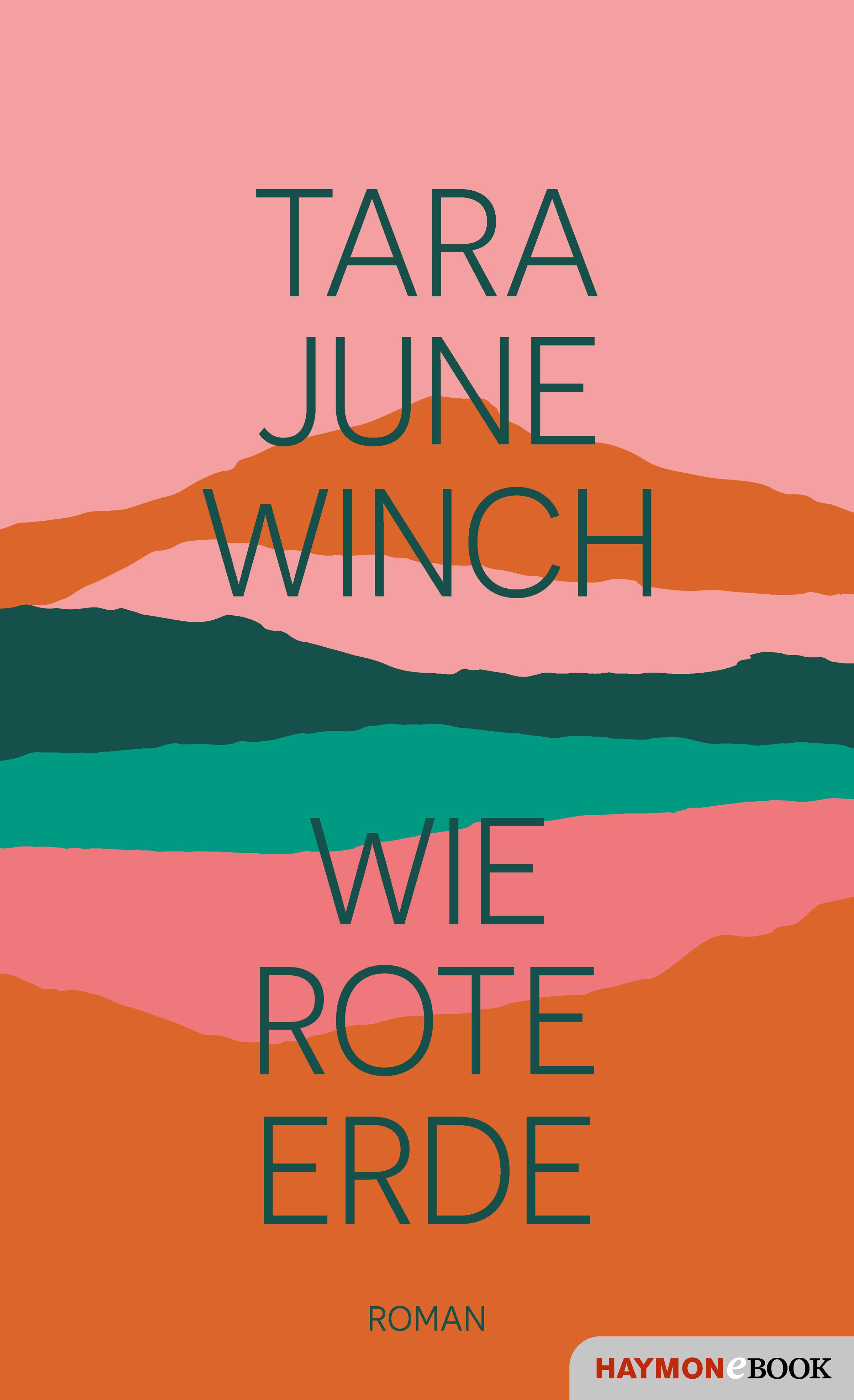
Wie rote Erde
Tara June Winch · übersetzt von Juliane Lochner · Haymon · 400 Seiten
Das Monatsbuch 07/23, hier als Taschenbuch: Augusts Rückkehr nach Prosperous und das Wörterbuch ihres Großvaters Albert.
Leserunde nachholenMonatsbuch 07/23
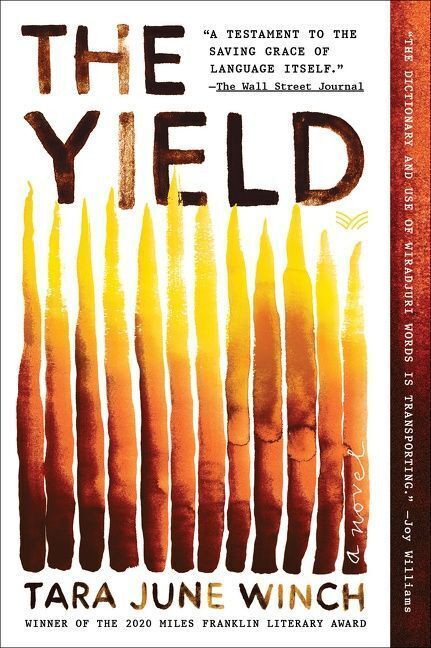
The Yield
Tara June Winch · HarperCollins · 352 Seiten · Englisch
Das Original, in dem die Wiradjuri-Wörter neben dem Englischen stehen – Miles Franklin Award 2020.
Die mit Sternchen markierten Links sind Affiliate-Links: Kaufst du darüber, erhalten wir eine kleine Provision. Für dich ändert sich am Preis nichts. »Swallow the Air« ist nicht auf Deutsch erschienen und bei Thalia derzeit nicht lieferbar.
Häufige Fragen
Ist diese Folge auf Deutsch?
Nein. Helens kurze An- und Abmoderation ist deutsch, das Gespräch mit Tara June Winch läuft komplett auf Englisch – sie lebt in Frankreich und war per Zoom zum Buchclub-Treffen zugeschaltet. Das Transkript unten gibt deshalb das englische Original wieder. Du solltest also Englisch verstehen, wenn du die Folge hören willst.
Wie ist Tara June Winch auf die Idee zu »Wie rote Erde« gekommen?
Beim Schreiben ihres ersten Romans »Swallow the Air« reiste sie 2005 in das Land ihres Vaters, Wiradjuri Country, und stieß in einem alten Missionsgebäude zufällig auf eine Sprachklasse von Uncle Stan Grant Senior, der die Wiradjuri-Sprache wiederbelebte – damals mit einem dünnen A4-Heft voller Wörter aus Dokumenten und Gesprächen mit Ältesten. Sie nahm rund 20 Wiradjuri-Wörter in ihr Debüt auf und bereute hinterher, die Sprache nicht tiefer erkundet zu haben. »Wie rote Erde« war das Versprechen, es noch einmal richtig zu machen: Sprache als Kern von Schmerz und Heilung einer Familie.
Gibt es »Wie rote Erde« als Hörbuch?
Auf Deutsch gab es zum Zeitpunkt der Aufnahme kein Hörbuch, nur das englische Original, gelesen vom Schauspieler und Autor Tony Briggs. Tara June Winch rät allen, die Englisch nicht als Erstsprache sprechen, eher zum Text: Drei wechselnde Stimmen und die Wörterbuch-Passagen seien auch für Muttersprachler*innen schwer zu hören.
Was würde Tara June Winch an »Wie rote Erde« heute anders machen?
Vor allem die Kapitel über August, sagt sie: Die Geschichte hätte straffer und klarer sein sollen. Sie hatte die zerrissene Figur bewusst in einem ebenso zerrissenen Stil geschrieben – im Rückblick eine schlechte Entscheidung, weil sie die Figur nicht vom Handwerk getrennt habe. Auch beim Protest am Ende sei nicht klar genug, wer die richtige Absicht und wer das richtige Handeln hat. Ihre Liste an Bedauern sei endlos – und jedes Buch der Versuch, das vorige neu zu schreiben.
Wer ist Tara June Winch?
Geboren 1983 in Wollongong, Australien; ihr Vater gehört zur Wiradjuri-Nation. Ihr Debüt »Swallow the Air« erschien 2006, es folgten »After the Carnage« (2016) und »The Yield« (2019), das 2020 unter anderem den Miles Franklin Award und den Prime Minister’s Literary Award gewann. Auf Deutsch erschien der Roman 2022 als »Wie rote Erde« bei Haymon, übersetzt von Juliane Lochner. Sie lebt in Frankreich.
Mehr zu Tara June Winch
Die ganze Folge zum Nachlesen
Automatisch erstellt und nur grob korrigiert – es kann Fehler enthalten, auch bei der Zuordnung, wer gerade spricht. Maßgeblich ist die Aufnahme. Das Gespräch wurde auf Englisch geführt, das Transkript ist deshalb englisch; Helens deutsche An- und Abmoderation steht nicht hier. Fragen aus dem Buchclub sind als „Aus dem Buchclub“ zusammengefasst.
Tara June Winch
Hi. Hi, everyone. How are you?
Helen
Yeah, great. Thank you for joining us.
Tara June Winch
Thanks for having me. Thanks for the invite – or my suggestion, I think it was.
Helen
Yeah, yeah, we haven’t tried that one yet. So we didn’t have an author on our actual book club meeting. So it’s like a first time for us. Very much looking forward to that. So we did prepare some questions. Maybe just to start off, most of us read it in German, so you probably know the German edition. And we read that for like four weeks now and talked about different aspects of the book. Maybe you saw a little bit on social media, I don’t know.
Tara June Winch
No.
Helen
There was a hike and lots of covers. Was nice, made me really happy.
Tara June Winch
Oh, great.
Helen
Maybe we start off with the question, like what inspired you to write The Yield?
Tara June Winch
Is it „yield“ in English?
Helen
Yield, yeah.
Tara June Winch
Yeah. So, is that your question, the inspiration? It’s a funny one. So actually when I was writing my first book, Swallow the Air, in 2005, I was going out to my father’s country and meeting relatives I hadn’t met before and sort of reconnecting with that country where he was taken from, Wiradjuri country in [unverständlich], in fact. And I just happened to stumble upon – and what is pretty much actually Prosperous, like my idea of how I had Prosperous in my head – I stumbled upon a language class at an old mission building. It was Uncle Stan Grant Senior, who revitalized the Wiradjuri language. He was actually giving a class, and he was just revitalizing language very early on. And he just had like an A4-type pamphlet, a very thin book of grocery words that he’d been working with elders and you know, some of the documents like pastoral or police record documents in language. And so he had, he was giving a class and I, it was really serendipitous that I was there to attend, basically. And after that, I really sort of fell in love with – like, I had this yearning to understand the language more and I could see it so central to wellbeing and so central to that idea of like the bullet was the means of the physical subjugation and the language was the means of the spiritual subjugation and really that look, seeing that kind of non-violent violence and I could see that in ways to the story that I was writing back then in 2006 – or it was 2005, actually. So I included about 20 Wiradjuri words in my first novel and afterwards I just felt like it wasn’t complete. I felt like a sense of regret when the book came out that I didn’t explore the linguistics more and so that’s what it really was. That was the inspiration. It was that promise after finishing one book and being disappointed in oneself to do it right, to have a redo at this very broad topic of language as sort of central to pain and also to healing for this family?
Helen
We did talk about the dictionary just before you came on and we’re wondering because you link it on your website, I didn’t check out the app but is it that this dictionary is updated or how does it work? Is it like a fixed state now?
Tara June Winch
Yeah, well, I don’t think language is really when, especially with Indigenous languages that are being revitalized, they’re never in a fixed state. It’s always like a living organism in a sense that more information comes in, more documents are received and there’s alterations in spelling or in pronunciation. More information is always being sort of, yeah, like reincorporated into a language like that. So I think the app is probably the most up-to-date in that sense, but also the actual paper dictionary. I’m not sure you would be interested in it because it’s not translated into German, but it also has different editions with additional words. And yeah, it’s really, in terms of language revitalization, I think Wiradjuri is one of the most successful in Australia of how well it’s done. And like, yeah, how complete the language has sort of been able to, to be taken back by Wiradjuri people. So there was 250 language groups in Australia. I’m sure you’ve talked about that. Yeah. Yeah. And there’s about 60 that have fluently spoken, and there’s about 10 that are really seriously being revitalized additionally at the moment. So it’s interesting. Yeah. To me, it was, yeah, to me.
Helen
Yeah, to us as well, because it’s difficult to comprehend really if you haven’t experienced anything similar to that. And we just talked about that we haven’t, or most of us haven’t really read much about Australia before this book. So you probably have heard of things, but you are more aware after reading your book. So thank you for writing it and for making us aware. We also talked about, because you mentioned the class, like the language class, we talked about a video that was shared about a school in Australia that teaches – is it Wiradjuri? Yeah, Wiradjuri. And what do you think of that? Is that, I had to check the word, I wasn’t even sure how you say that, cultural appropriation? Or if it’s a good thing that schools teach it.
Tara June Winch
Oh no, it’s a great thing because so many of the general Australians, especially children, like myself, I didn’t grow up with the education system that they have now where they’re doing truth-telling. And I’m sure you’re all aware of the necessity of truth-telling of history for generations to come and will continue to be. So having actual, you know, appropriate history classes and incorporating language on the country that these children are going to school and they’re living in, it’s beautiful. It’s like the entry into sense of reconciliation and a sense of belonging actually for every Australian. Because the only way to, I think Australia has a sort of crisis of identity in a lot of ways because they’ve never really, Australians haven’t really reckoned with the past properly, Especially with the education system has a lot to do with that. So having schools independently curate language programs and truth-telling kind of history classes is super important in terms of changing the outlook and the idea of being Australian for the next generations because it’s a very divisive kind of topic about what is Australia? What is being Australian? What is being an Aussie? Especially when it comes to the topic of Indigenous Australians. Yeah. No, no. So that’s good. It’s not cultural appropriation. And what happens in these schools is you have Indigenous teachers teaching the language or being teaching assistants alongside other teachers. So it actually aids employment and continues culture at the same time. It’s a fantastic program.
Helen
There is no German audio version, but there’s an English audiobook. One of us listened to it and she found it difficult because it’s Australian accent, but also it was great because you could actually hear the Wiradjuri words properly pronounced. And we talked about that this person reading it is actually an Aboriginal person. So, and also in the German translation you can read in the end that there were sensitivity readers and like a lot of care, I feel like, went into these productions and I think that’s kind of special. It’s really good, and it would be great if more things like that happened, but I haven’t really experienced a book project, like a translation project like that. And yeah, we thought that was really, really cool and really special. So maybe we’ll try the audiobook afterwards again to really listen to it.
Tara June Winch
I think, I think for an English-not-as-a-first-language speaker, if that makes sense – second language or third language speaker, sorry – I wouldn’t recommend the audiobook because I think it’s difficult even for English speakers to listen to it. Just because you’ve got this three alternate voices and then because you’ve got that, because you’ve got the layout of the dictionary, hearing that on audio can be quite [unverständlich]. I honestly would just stick with the text and maybe there’ll be a German audiobook in the future down the line. Yeah, I would steer clear of that. But the actual narrator is a film director called Tony Briggs. He narrated it, and he’s actually Yorta Yorta, is actually not Wiradjuri, it’s not his language. But we sort of of wanted him to do it and invited him to do it because just to show how easy language acquisition is and how willing even other Indigenous people speaking other Indigenous languages were to learn their, you know, neighbour’s language. And he actually ended up buying – oh no, beforehand he’d bought the – no, no, it was after. Sorry, I just got back from vacation today. I’m a bit tired. I’m sunstruck. He bought the film rights to The Yield after doing the audiobook. So he’s making the film and he did make a great film that you should all watch, and you can easily get it in Germany – oh, now I can’t remember the name, but his film, I’ll find it, it’s got an international name, but it’s about Aboriginal soul singers in Australia during the Vietnam War. And it’s a true story that he’s written about his mother. But I can send you Helen like a bunch of film and book recommendations if you’d like as a jumping off point.
Helen
Yeah, that would be great. Yeah, thank you.
Tara June Winch
I’ll do that straight after we talk. And there’s another one. I don’t know if you guys have seen Rabbit-Proof Fence. That’s a really accessible film, international film.
Helen
Yeah, we wanted, because sometimes if there is like a film adaptation, we would do like a film watching evening. But this one, I watched it a couple of years ago, but you can’t see it. There’s no place online where you can actually stream it now so that’s a shame but we did talk about that film.
Tara June Winch
The other one is The Sapphires, is the one I was talking about, I just looked it up. Okay. It’s by the narrator it’s such a beautiful film but yeah I’ll send you a little list.
Helen
Great yeah thank you.
Tara June Winch
So [unverständlich] or some other alternate website. Some of these. Yeah, maybe. No, that’s all right. So The Yield will be a film at some point.
Helen
Great. We’ll have to watch it then. Because you said you invited Tony Briggs – is his name, isn’t it, the narrator. Did you have influence in like the audio book production and the translation in other languages?
Tara June Winch
No, I mean German was probably the most intensive in terms of translations and the translator I think was very thorough and very professional but I don’t, I wouldn’t know because I don’t speak German so I don’t know what it actually is on the page. It’s quite funny if you just sort of trust the narrator that they understand, especially when you’re using metaphor and like very sometimes bizarre sort of poetic language that they can actually understand it. But she was being very thorough in terms of the history of the German language and wanted to be really careful. Of the top of my head, I can’t remember some of of the terms that she was really, really sensitive with and made me aware, and it was really interesting for me too.
Helen
I think like one of the bigger ones is race.
Tara June Winch
Yeah, the way that it’s written, it was like highly charged in German. The word was native. Yeah, so yeah, in terms of how much I work with the translator, normally not very much, but with German a lot. And, you know, to a point where I was like – German translation! I was getting angry about it. But it was necessary. Yeah, it was necessary when you look at history, it shows you how powerful language can be, you know, and how historically significant it can be. Yeah, even Polish just came out a couple of, maybe a month or so ago, and I just did an interview a couple of days ago, with the woman, and she was talking about – we were talking about Polish as an Indigenous language, and they do have minority Indigenous languages in Poland and sort of that after the second world war that revival like how central language was in the rebuilding of even after the Warsaw uprising and the rebuilding of the city which was so fascinating. So languages can be such – and that was because of, obviously, the Soviet and the German destruction of the Polish language in that era, in that region, and also obviously those who died. But language can be such a tool of such a weapon and such a healing balm at the same time. It’s really fascinating in all countries, not just in Australia.
Helen
Yeah, maybe that question kind of fits, but we were wondering about how differently the book was perceived with people like us, but also with other Aboriginal people. Did you find there was a difference in perception or not so much?
Tara June Winch
No, not really. You mean people like you as in Germans, or like non-English-speaking people?
Helen
Non-aboriginal people probably.
Tara June Winch
No, I think there’s been like varied reactions and it’ll depend on the sort of awareness and education of the reader. But yeah, sometimes it’s emotional because they felt like they didn’t know or they weren’t taught a history. And I mean, some people don’t like the book, for sure, but that’s any book. But in terms of like, Indigenous people that have read it, I’ve had a really positive experience and it’s like brought us closer together. And I think there’s been some books that have been published in the last few years that have sort of almost been in conversation with my book by other Indigenous authors. That’s really inspiring, especially the publishing industry, it’s sort of changed since the book came out. I’m sort of an advisor, in a sense, to a bunch of the big five publishers in Australia, where I help them find Indigenous writers and especially encourage them to bilingually publish, because it’s something that’s been quite scary for publishers in Australia is to have an Indigenous language and English side by side. So I think honestly, I think it’s been a positive response. And obviously, when you say people like you, non-Australians are going to have a different response, but it’s been really fascinating, like I said, with Polish to hear stories about how central language has been in conflict in other people’s countries through reading the translations. Yeah it’s been great. Does anyone else want to ask questions or did you keep all your questions, Helen? Did you keep them? I didn’t allow them.
Helen
No we collected them beforehand, but maybe someone would like to ask a question themselves. Nope. Oh, yeah.
Aus dem Buchclub
Hi, Tara. Just a short or minor follow-up question. In the beginning, you said you weren’t satisfied with one of the books you’ve written, like you didn’t do justice to the topic. Which book is that? Like I haven’t checked all of your books, so I don’t know. I would find it on Google, but maybe you can tell us.
Tara June Winch
Oh, that one was Swallow the Air, but none of my other books have been translated into German except for this one.
Aus dem Buchclub
Okay.
Tara June Winch
I mean, you’re speaking English, so this is it’s like a very slight book, it’ll only take like two days to read, if you’re interested. That one’s been studied on high school curriculums for like, over 10 years now, which is really great. Yeah, it’s been great. It’s, it’s been, yeah, it’s used as a teaching tool. But still, yeah, I think that’s every writer’s experience that there’s a sense of regret after, or any musician or any artist or anyone that does anything in life.
Helen
Yeah, definitely. Thanks for being here. It’s so great to have you on the Zoom meeting.
Tara June Winch
I can stay another five minutes if anyone’s got any more questions.
Aus dem Buchclub
Hi Tara, first of all thank you again for being here. I also had a follow-up on that same question or same statement. What are your regrets about this novel then? Anything that you feel you left out that you didn’t mention?
Tara June Winch
It’s so funny, there’s so many because even yesterday my friend is reading it in French and I was just like looking over the shoulder reading along in French and I was thinking God, that’s so terrible. Especially the paragraphs of the third-person August section. I think that that story should have been tighter and I think clearer. But my thinking at the time was because this character’s so sort of broken and confused and sort of dislocated from her culture and family and just herself and her body and you know her spirit in general, then in my mind I remember thinking is I wanted the writing to be in that similar style which I think was a bad choice. I think it should have been, I should have separated the character from – like the art from the artist – the character from that kind of, the character arc from the actual artistry of the writing. Yeah, that’s a huge regret, massive. And so it’s heaps of stuff like being silly with language. And probably – I don’t know how far you’ve got into the book, so I don’t want to do spoilers.
Helen
No, we, I think we’re all finished.
Tara June Winch
Oh, so like around the protest stuff, I don’t think that was really clear if there was like, who was like the villainous, and like right intention versus right action with a lot of the characters when they all sort of came together. Oh, I could just stay here all night and tell you about my regrets. The list is endless. But I think that’s just normal. I think every book is one trying to rewrite the previous book, yeah.
Aus dem Buchclub
That is so interesting, thank you. So are you trying to do that right now with the current one?
Tara June Winch
Yeah, so this one that I’m writing, I’m writing two, one set in Switzerland and it’s sort of about eternal return and time, but talking about colonialism as well, and the other, this one in particular, the other one is called »In the Event of My Death« and it’s about a defecting Aboriginal World War II soldier who defects in Europe and stays here. And in the event of my death were the letters that soldiers had in their pockets and that had their like last will and testament or you know some kind of you know admission or truth-telling or whatever it is or even regrets. And so on the outside of the envelope or in English in any case it would say in the event of my death so obviously to be opened when they die and so this was this book, the title is called »In the Event of My Death« and the whole thing is written in a letter format and the character is basically – [unverständlich] – I don’t want to feel like I’m repeating the same book but it’s in my mind it’s Poppy’s voice that kind of sing-song storytelling, like wandering from place to place and one story leads on to another and opens up another door. It’s written in that kind of way so yeah that’s it’s like trying to redo the book before because I think the big response that I noticed was that most people liked the Poppy sections the most and the other stuff in the book kind of fell away. It was a huge like very obvious reaction and so I thought oh I can that voice comes really easily and I can definitely tell a story that way but obviously distinctively another character. Yeah that’s the that’s the rewriting that I’m doing now.
Helen
We did vote for our favorite character yesterday. We did like, I don’t know, like a review and Poppy was by far the most favourite character in the book.
Tara June Winch
[unverständlich]
Helen
Yeah, someone has another question.
Aus dem Buchclub
Yeah, just a short one. How long did it take you to write The Yield?
Tara June Winch
Yeah, so maybe it was like 10 years, but that was like gestation, because so much of writing for me is sort of lucid dreaming and thinking about the idea and, you know, following it, even if I’m doing other things in my life. So those 10 years in terms of following the same idea, but this actual sitting down and gathering all those notes over the 10 years, because I did have all my paper notes still, paper notebooks. In terms of gathering it all, writing it all down, constructing it, putting it together, it was about, it was quite a fast process. Maybe it was about 10 months because it had been living in my head for all that time, which is quite short for me because I write really, really slow. So yeah, 10 months was really like, it felt like a really fast sprint in a sense. But yeah, because it lived in my head for 10 years and I was slowly chipping at something, I think that’s why it only took less than a year to get down on the page. All right guys, well good luck with the rest of your book club. Thank you so much for having me.
Helen
Thank you so much for taking the time like on your return day or holidays. We appreciate that.
Tara June Winch
And I’m moving the same day, I had to go to my new apartment this morning as well. So, extra time – I apologise. Thank you so much.
Helen
Dankeschön. Thank you. Thank you.
Tara June Winch
Thank you.
Helen
Bye. Bye. Bye.


