
Startseite › Podcast › Jessica Andrews über »Und jetzt bin ich hier«
Podcast · Folge 38
Jessica Andrews über »Und jetzt bin ich hier«: emotionale Wahrheit statt Memoir, acht Monate in Irland und ein Buch, das die Mutter gern aus ihrer Sicht erzählt hätte
Die Autorin beantwortet die Fragen des Buchclubs, auf Englisch: warum Saltwater ein Roman ist, wie sie ihn zerschnitten und neu zusammengesetzt hat, was ihr die deutsche Übersetzerin fragte – und worum es in »Milk Teeth« geht
Stand heute
Aufgenommen im Juni 2023, am Tag nach dem Buchclub-Treffen zu »Und jetzt bin ich hier«, dem Monatsbuch 06/23. Das Gewinnspiel, das Helen mitten in der Folge auf Deutsch ankündigt, ist längst beendet. »Milk Teeth«, Jessica Andrews’ zweiter Roman, war zum Zeitpunkt der Aufnahme noch nicht auf Deutsch erschienen; das neue Buch, über das sie noch nicht sprechen wollte, bleibt in der Folge ein Geheimnis.
Diese Folge ist auf Englisch. Jessica Andrews kommt aus Großbritannien und spricht kein Deutsch, darum erklärt Helen das nur kurz vorweg – und stellt dann die Fragen, die der Buchclub im Juni 2023 zu »Und jetzt bin ich hier« gesammelt hatte, im Original »Saltwater«. Es geht um die Frage, die beim Buchclub-Treffen am Vorabend viele beschäftigte: Wie viel von Lucys Geschichte ist Jessica Andrews’ eigene, und warum ist das Buch trotzdem ein Roman und kein Memoir? Die Autorin erzählt, wie sie die drei Erzählstränge getrennt schrieb und das Manuskript buchstäblich zerschnitt, warum die Mutter-Tochter-Passagen in poetischer Sprache stehen, wie sie acht Monate ohne Geld und Internet im Haus ihres verstorbenen Großvaters in Irland schrieb, was sie mit der deutschen Übersetzerin Anke Burger besprochen hat, welche Bücher sie beim Schreiben begleitet haben – und was ihre Mutter am Tag nach der Veröffentlichung sagte.
Jessica Andrews
Schriftstellerin, Sunderland / London
Jessica Andrews wurde 1992 in Sunderland im Nordosten Englands geboren, hat Englische Literatur am King’s College London und Creative Writing an der University of Kent studiert und seither unter anderem in Paris, Donegal, Barcelona und London gelebt. Ihr Debütroman »Saltwater« (2019) gewann 2020 den Portico Prize und erschien in der Übersetzung von Anke Burger als »Und jetzt bin ich hier« bei Hoffmann und Campe; 2022 folgte »Milk Teeth«. Sie unterrichtet Creative Writing und ist Mitherausgeberin des Online-Magazins The Grapevine, das unterrepräsentierten Autor*innen Sichtbarkeit geben will.
Roman oder Memoir?
Die Idee zu »Saltwater« trug Jessica Andrews lange mit sich herum und versuchte sie auf mehrere Arten zu schreiben, auch in der dritten Person – ohne die richtige Stimme zu finden. Erst als sie beschloss, nicht an einen Roman zu denken, sondern jeden Tag einfach zu schreiben, worauf sie Lust hatte, kam eine Ich-Stimme heraus, die ihrer eigenen nahe ist. Das Buch wurzelt in ihren Erfahrungen, mit Parallelen zu ihrem Leben, und ist trotzdem Fiktion. Beim Buchclub-Treffen am Vorabend hatten die Mädels Interviews gelesen, in denen sie sagt, vieles basiere auf ihrem Leben – warum also kein Memoir? Weil sie, sagt die Autorin, über Mutter-Tochter-Beziehungen, soziale Klasse, ihre Heimatstadt und das Gefühl von Zugehörigkeit und Entwurzelung schreiben wollte und die Bindung ans tatsächlich Geschehene sie daran gehindert hätte, so tief zu gehen; die fragmentierte Form mit ihren Schichten aus Zeit und Erinnerung gab ihr als Roman mehr Freiheit. Und es sei eine Frage der Macht: Lucy hat im Buch oft keine, die Autorin über ihre Welt schon.
And I think the thing I was trying to work out was how to write something that felt as if it had emotional truth in it.Jessica Andrews
Dass Leser*innen sie für Lucy halten, passiert ihr ständig – gerade Schriftstellerinnen werde unterstellt, alles sei wahr. Inzwischen kann sie damit spielen und findet die Frage dahinter interessant: Warum wollen wir, dass eine Geschichte wahr ist? Helen nimmt das als Frage fürs nächste Treffen mit. Die zentrale Botschaft des Buchs steckt für die Autorin in einer frühen Szene, in der Lucy und ihre Mutter die Sachen des verstorbenen Großvaters im Garten verbrennen: wie viel der Geschichte ihr gehört und wie viel der Vergangenheit sie zurücklassen darf. Es geht um Herkunft, Familie und Klasse – und darum, was man davon tragen muss und was man loser halten kann –, gespiegelt im Körper und in der Nähe und Distanz zur Mutter.
Drei Stränge, zerschnitten und neu gelegt
Der Roman hat drei Zeitebenen: Lucy in der Gegenwart in Irland, die chronologische Geschichte ihrer Kindheit und Jugend, und die fragmentierten Passagen, in denen die Tochter die Mutter direkt anspricht. Jessica Andrews hat die drei Stränge getrennt geschrieben und erst im Lektorat verwoben – sie hat das Manuskript buchstäblich zerschnitten und die Fragmente nebeneinandergelegt, um eine andere Entwicklung sichtbar zu machen: Wo steht Lucys Geschichte im Verhältnis zur Großmutter, zur Beziehung der Eltern vor ihrer Geburt? Einige im Buchclub hatten sich gefragt, warum die Mutter direkt angesprochen wird. Weil die Beziehung zur Mutter das Herz des Buchs sei, antwortet sie: eine körperliche Intimität, nah, elementar, „sticky“, schwer in konventionelle Prosa zu fassen – deshalb die poetischere Sprache. Am Ende begreift Lucy, dass sie mit ihrer Mutter und ihrer Vergangenheit immer verbunden bleibt, nur dass sich dieses Verhältnis ständig verschiebt.
Salzwasser, ein Titel und zwei Cover
Die meisten im Buchclub haben das Buch auf Deutsch gelesen, einige auf Englisch – und beide Ausgaben verglichen, bis hin zum Motto am Anfang, das im Deutschen anders klingt. Mit der Übersetzerin Anke Burger hatte Jessica Andrews viel Kontakt: Fragen per Mail hin und her, und als die Übersetzerin zur Buchpremiere in London war, gingen die beiden gemeinsam essen. Solche Rückfragen schätzt die Autorin, weil sie die eigene Sprache durch eine andere betrachten lassen; Übersetzungen seien eigene Kunstwerke, und die Übersetzer*innen stünden trotzdem oft nicht einmal auf dem Cover – ein Grund, warum der Buchclub sie eigens vorstellt. Titel und Cover schicken internationale Verlage ihr zur Abstimmung; ob „Salzwasser“ auf Deutsch funktioniert hätte, kann sie selbst nicht beurteilen, auf Französisch heißt das Buch »Dans son sillage«. Das deutsche Cover mit der liegenden Frau gefällt ihr, auch wenn die britische Ausgabe – ein Foto, das London zeigen soll, aber in Japan aufgenommen wurde – mehr von der Düsternis des Buchs trägt. Im Buchclub ging es an dieser Stelle auseinander: Manche fanden das dunklere englische Cover passender zum schweren Leseerlebnis, Helen sieht in der liegenden Frau Lucy in Irland, die endlich Zeit zum Nachdenken hat.
Acht Monate in Irland – ohne Geld, ohne Internet
Jessica Andrews lebte in London, jobbte in Bars und Cafés und wollte einen Roman schreiben. Als ihr Großvater in Irland starb und ein leeres Haus hinterließ, zog sie hin, um ein paar Monate zu schreiben – es wurden acht. Miete fiel weg, Geld hatte sie trotzdem keins: Sie gab einem Schüler aus dem Ort Nachhilfe für 20 Euro die Woche und lebte davon, konnte nicht Auto fahren und radelte überallhin, mitten im Winter, auf dem Land, allein. Zuerst schrieb sie einen Monat lang eine andere Fassung, geplant mit Figurenkarten und ausgearbeiteter Handlung, so, wie man ihrer Vorstellung nach ein Buch schreibt – 20.000 Wörter ohne Leben. Dann die Krise: Sie hatte ihre Jobs gekündigt, war ausgezogen, nur für dieses Buch, und fürchtete, es nicht zu können. Also riss sie die Figurenkarten ab und schrieb jeden Tag, worauf sie Lust hatte; danach kam das Buch schnell, sehr viel schneller als später das zweite. Das Wichtigste aber: Sie las ohne Unterlass, weil es sonst nichts zu tun gab, und ist überzeugt, nur deshalb schreiben gekonnt zu haben – auch wenn sie, sobald ein Text läuft, das Lesen drosselt, um nicht zu imitieren. Allein war sie nicht ganz: Sie kannte Leute im Ort von Kindheitsbesuchen beim Großvater, Freund*innen kamen, und es gab lange nächtliche Telefonate, in denen sie die Idee des Buchs durchsprach. Ihr Rat: Ein Projekt dieser Größe sollte man nicht allein im Kopf tragen.
Ihr Master in Creative Writing hat ihr dabei weniger Technik als Lesen beigebracht, sagt sie – und das sagt sie heute, selbst Dozentin, ihren Studierenden: Ein solches Studium zeigt Wege und Werkzeuge, welche Art Schriftsteller*in man ist, findet man selbst heraus. Recherche hieß für sie, mit der Familie zu sprechen, alte Fotos aus Sunderland anzusehen und mit ihrer Mutter darüber zu reden, wie die Stadt in deren Jugend war; dazu Romane, die etwas Ähnliches erreichen, vor allem Eimear McBrides »A Girl Is a Half-formed Thing«. Eine Playlist gab es auch – Lieder, die ihre Eltern hörten, als sie jung waren –, nur nicht beim Schreiben selbst. Der Buchclub hat seine eigene Playlist zum Buch gebaut; Helen verspricht, sie zu schicken.
Was die Mutter sagte
Familie und Freund*innen hätten stolz und unterstützend reagiert, erzählt Jessica Andrews. Ihre Mutter kannte das Buch früh und hatte eine erste Fassung gelesen; die Autorin fragte sie immer wieder, ob etwas zu nah am echten Leben sei. Am Tag nach der Veröffentlichung sagte die Mutter dann, sie wisse, dass das Buch aus der Perspektive der Tochter geschrieben sei – aber sie hätte gern die Gelegenheit gehabt, ihre Version zu erzählen. Damals war die Autorin verletzt, heute gibt sie ihr recht: Sie hat eine Version einer Geschichte geschrieben, die auch die ihrer Mutter ist, und damit eine andere Stimme zum Schweigen gebracht. Zu jedem Ereignis gebe es mehrere Wahrheiten, und sie habe nur eine davon aufgeschrieben – wie bei allem, was in der Wirklichkeit wurzelt. Helen ergänzt: So unzuverlässig sind auch Erinnerungen.
Einflüsse, »Milk Teeth« und ein zu zartes neues Buch
Neben Eimear McBride nennt Jessica Andrews Andrea Ashworths Memoir »Once in a House on Fire« über eine Jugend in Manchester, das sie sehr jung gelesen hat, Jenny Offill und Deborah Levys »Hot Milk«, das um die Zeit ihres Schreibens erschien; dazu liest sie Memoirs und viel Lyrik. Ihr zweiter Roman »Milk Teeth« war zum Zeitpunkt der Aufnahme noch nicht übersetzt. Beide Bücher kreisen um Klasse, Geschlecht und den Körper – »Saltwater« um jemanden, der sich in einer Welt Platz schafft, die ihm diesen Platz nicht lässt, »Milk Teeth« um die Frage, ob man einen Platz, der sich öffnet, überhaupt annehmen kann, und darum, wie wir lernen, die eigenen Wünsche zu überwachen. Dabei hatte sie beim zweiten Buch eigentlich nicht mehr über diese Themen schreiben wollen; es ging nicht ohne. An etwas Neuem arbeitet sie lose – die Idee sei noch zu zerbrechlich, um darüber zu sprechen. Helen bedankt sich für den Blick hinter den Vorhang, Jessica Andrews dafür, dass der Buchclub das Buch so sorgfältig gelesen hat.
Wenn du »Und jetzt bin ich hier« gelesen hast und wissen willst, wie viel Lucy in Jessica Andrews steckt, hörst du es in der ganzen Folge – auf Englisch.
Die ganze Folge hören
Die Bücher aus der Folge
Das Buchclub-Buch in beiden Sprachen, Jessica Andrews’ zweiter Roman und ein Einfluss, den es auch auf Deutsch gibt.
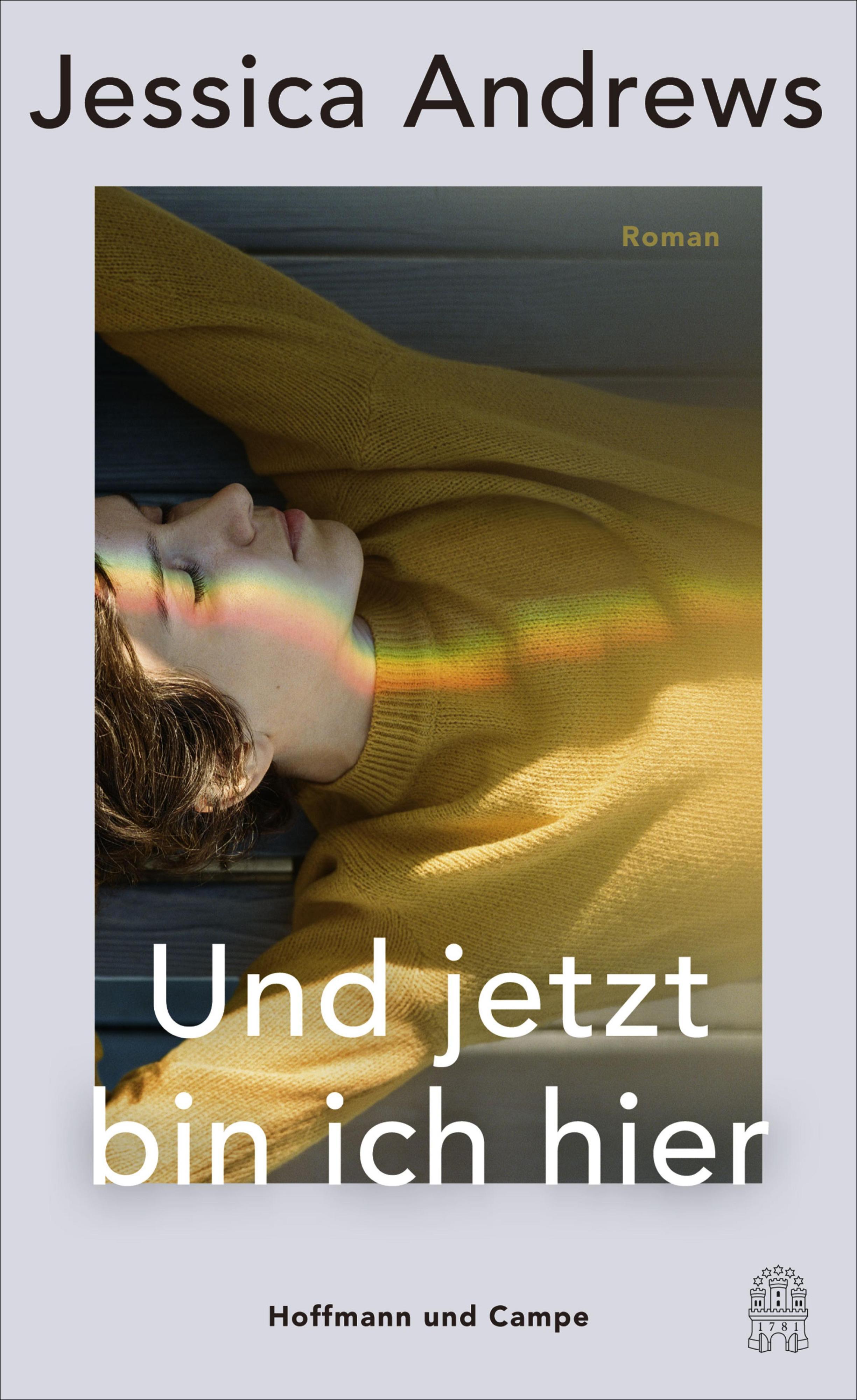
Und jetzt bin ich hier
Jessica Andrews · übersetzt von Anke Burger · Hoffmann und Campe · 336 Seiten
Das Monatsbuch 06/23: Lucy zwischen Sunderland, London und Irland – der Roman, um den es in der ganzen Folge geht.
Leserunde nachholenMonatsbuch 06/23
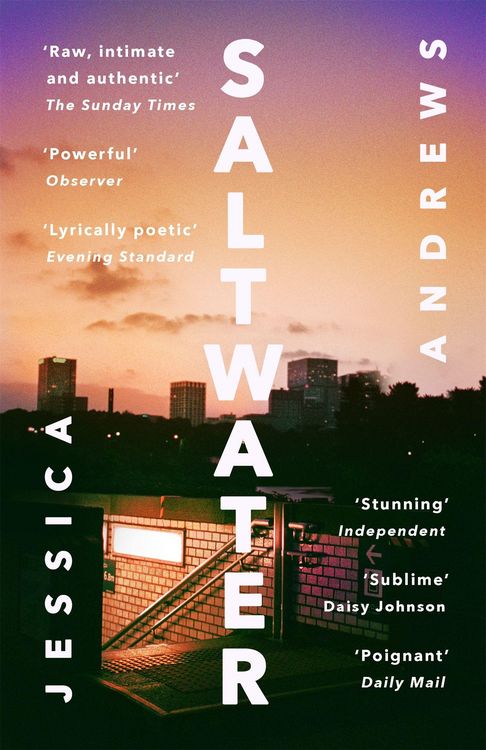
Saltwater
Jessica Andrews · Hodder & Stoughton · 298 Seiten · Englisch
Das Original mit dem dunkleren Cover, das London zeigen soll und in Japan fotografiert wurde – Portico Prize 2020.
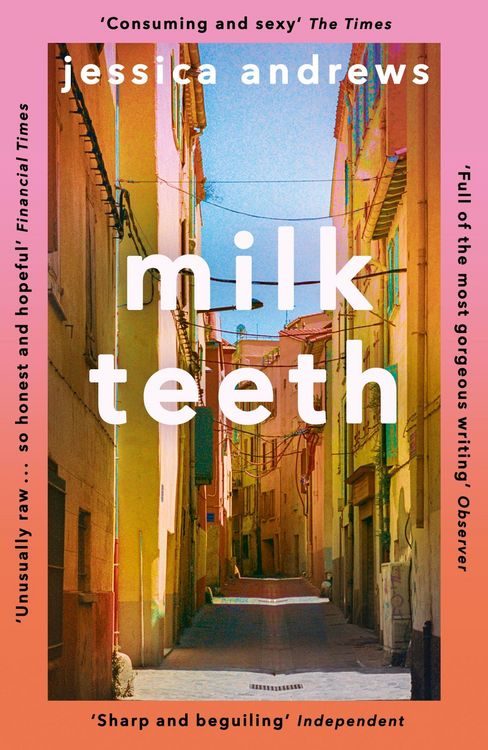
Milk Teeth
Jessica Andrews · Hodder & Stoughton · 248 Seiten · Englisch
Ihr zweiter Roman: Kann man einen Platz annehmen, der sich öffnet? Zum Zeitpunkt der Aufnahme noch nicht auf Deutsch.
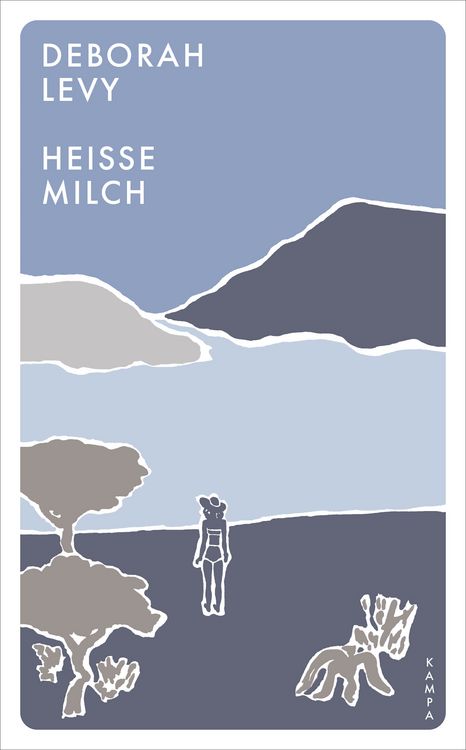
Heiße Milch
Deborah Levy · übersetzt von Barbara Schaden · Kampa · 304 Seiten
Einer der Romane, die Jessica Andrews um die Zeit ihres Schreibens las – auf Deutsch bei Kampa.
Die mit Sternchen markierten Links sind Affiliate-Links: Kaufst du darüber, erhalten wir eine kleine Provision. Für dich ändert sich am Preis nichts. Eimear McBrides »A Girl Is a Half-formed Thing« und Andrea Ashworths »Once in a House on Fire«, die Jessica Andrews ebenfalls nennt, sind bei Thalia derzeit nicht lieferbar.
Häufige Fragen
Ist diese Folge auf Deutsch?
Nein. Helens kurze An- und Abmoderation ist deutsch, das Gespräch mit Jessica Andrews läuft komplett auf Englisch – sie kommt aus Großbritannien und spricht kein Deutsch, wie Helen am Anfang erklärt. Das Transkript unten gibt deshalb das englische Original wieder. Du solltest also Englisch verstehen, wenn du die Folge hören willst.
Ist »Und jetzt bin ich hier« ein Roman oder ein Memoir?
Ein Roman, sagt Jessica Andrews – auch wenn er in ihren eigenen Erfahrungen wurzelt und es Parallelen zu ihrem Leben gibt. Sie wollte etwas schreiben, das „emotionale Wahrheit“ hat: Die Gefühle und das, was die Figuren durchmachen, sollten wahr sein. Als Roman konnte sie Mutter-Tochter-Beziehung, soziale Klasse und ihre Heimatstadt tiefer erkunden, als es die Bindung an das tatsächlich Geschehene erlaubt hätte, und die fragmentierte Form frei nutzen. Dass Leser*innen sie trotzdem für Lucy halten, passiert ihr ständig; inzwischen findet sie die Frage, warum wir Geschichten unbedingt für wahr halten wollen, selbst spannend.
Wie ist »Saltwater« entstanden?
Jessica Andrews lebte in London, arbeitete in Bars und Cafés und wollte einen Roman schreiben. Als ihr Großvater in Irland starb und ein leeres Haus hinterließ, zog sie dorthin – geplant waren ein paar Monate, es wurden acht, ohne Geld, ohne Internet, ohne Auto, mit Nachhilfe für 20 Euro die Woche als einzigem Einkommen. Eine erste, sorgfältig geplante Fassung mit Figurenkarten funktionierte nicht; nach einer Krise warf sie alles weg und schrieb jeden Tag, worauf sie Lust hatte. Dann kam das Buch schnell. Die drei Erzählstränge schrieb sie getrennt und verwob sie erst im Lektorat – sie hat den Roman buchstäblich zerschnitten und neu zusammengesetzt.
Hatte Jessica Andrews Kontakt zur deutschen Übersetzerin?
Ja. Mit Anke Burger, die »Saltwater« ins Deutsche übertragen hat, gab es viele Fragen per E-Mail hin und her; als Anke Burger zur Buchpremiere in London war, trafen sich die beiden zum Mittagessen. Jessica Andrews mag Rückfragen von Übersetzer*innen, weil sie zwingen, die eigene Sprache zu hinterfragen; Übersetzungen seien eigene Kunstwerke, deren Urheber*innen oft nicht einmal auf dem Cover stehen. Den deutschen Titel und das Cover haben die Verlage ihr zur Abstimmung geschickt – den französischen Titel »Dans son sillage« findet sie ebenfalls passend.
Wer ist Jessica Andrews?
Jessica Andrews, geboren 1992 in Sunderland im Nordosten Englands, hat in London und Kent studiert und seither unter anderem in Paris, Donegal, Barcelona und London gelebt. Ihr Debütroman »Saltwater« (2019) gewann 2020 den Portico Prize und erschien in der Übersetzung von Anke Burger als »Und jetzt bin ich hier« bei Hoffmann und Campe; 2022 folgte »Milk Teeth«. Sie unterrichtet Creative Writing, ist Mitherausgeberin des Online-Magazins The Grapevine und arbeitet an einem neuen Buch, über das sie in der Folge noch nichts verrät.
Mehr von Jessica Andrews
Die ganze Folge zum Nachlesen
Automatisch erstellt und nur grob korrigiert – es kann Fehler enthalten, auch bei der Zuordnung, wer gerade spricht. Maßgeblich ist die Aufnahme. Das Gespräch wurde auf Englisch geführt, das Transkript ist deshalb englisch; Helens deutsche An- und Abmoderation und der deutsche Gewinnspiel-Hinweis stehen nicht hier.
Helen
Hi Jessica, thank you so much for taking the time to answer our questions about Saltwater or in our case Und jetzt bin ich hier.
Jessica Andrews
Thanks so much for having me.
Helen
So as I told you before we read Saltwater this month, so in June, most of us in German though and I collected questions from the community and maybe we start off with this one. What was the inspiration for Saltwater? Was there a specific experience or topic that prompted you to write this book?
Jessica Andrews
I think that I sort of had this idea for a novel and I was trying to write it in a few different ways. Like I think I hadn’t quite found the voice so I was sort of circling around the same themes or kind of the same places but it didn’t really feel like it was working. There was a version that was written in third person but it was only really when I sort of I sat down and I decided like not to think about writing a novel. I just thought I’m just doing a project And I’m going to sit down and just write what I feel like writing every day. And the voice that came out was in first person and it was closer to my own. And it’s a book that it’s rooted in my own experiences, like there’s some parallels with my own life, but it is still fiction. And I think the thing I was trying to work out was how to write something that felt as if it had emotional truth in it. So the feelings of it were true, and the things that the characters were going through were true, and kind of the things that it wanted to say about the world felt true. And I think sometimes we can get at that through writing something that is pure fiction, and other times sticking closer to some kind of real truth helps you to tell the story that you want to tell. So with writing Saltwater, it was trying to work out what was the truth I was trying to tell, and what would be the best way to kind of help me reach that.
Helen
Okay, interesting. We had our book club meeting yesterday, and we discussed this part, like it being a novel, but we read some interviews and articles about where you were interviewed about the book and you said that lots of it was kind of based on your life so we were wondering how you decided on it rather being a novel than what would be a memoir probably, right?
Jessica Andrews
Yeah, I guess it’s like I suppose going back to that thing I’m saying about emotional truth, it’s like I wanted to say certain things about mother daughter relationships and social class and the city where I grew up and kind of my family relationships or experiences that I’d had in the world and I wanted to explore kind of this sense of belonging or kind of dislocation and if I had been kind of confined to the truth of what had happened I wouldn’t have been able to explore those things in as much depth as they needed, you know, sometimes adding fictional elements helps you to kind of like push an idea a little bit further. And I guess because I’m also quite, you know, the form of it is quite experimental, it’s quite fractured and fragmented. And it’s very much about sort of all of these different layers of time and memory stacked up on each other. And to write that as a novel, kind of, it just gave me much more freedom, I think, to kind of use the novelistic form, but also to sort of put things, experiences, ideas, places together that wouldn’t quite, it wouldn’t quite work in the real world. And I think there’s also something in kind of like, being the agent of your own story. And you know, it’s especially like Lucy in the book, she often doesn’t feel like she has much power. So for me as a writer, it’s quite a powerful act to kind of think, okay, well, I’m in control of the story and I’m in control of this world, and I can manipulate it so that people kind of have to see it through my perspective. And perhaps if you’re writing memoir or something that’s more rooted in reality, you can’t do that in quite the same way.
Helen
Yeah, does it happen to you often though, that people think you’re Lucy or Lucy’s story is your story.
Jessica Andrews
Yeah, definitely all of the time, but I think that as I’ve like written, as I’ve written more, my relationship with that has become a bit easier and there’s part of like, I think especially when you’re like a woman writer, people are just going to assume that everything you write is true. So you can, like, you can have a bit of fun with that, in a way, like I’m really interested in this idea of truth and like, why, why do people want things to be true? Why does that feel important to us? And I feel like I’m starting to enjoy that in my work, and I can hold it a bit more loosely. And I kind of, there’s something quite fun in not misleading people, but kind of like, getting people to ask that question of themselves, you know, like, why do I want this story to be true? Like, what is it about it that feels important to me? And kind of how much of fiction is true in its own way? And sort of what are our relationships to that? So yeah, it’s something that’s really interesting to me, I think, that reaction to it. And because I, you know, I have also experienced that you read a book or you watch a film that you identify with, and you really want it to be true. And it’s like, you know, why is that? Why do we feel like that?
Helen
Yeah, it’s something we could just consider, at least next time, could have been a good idea for yesterday, for our meeting, to think about why we feel or why we resonate, I guess, with Lucy and what we experience while reading the book. So yeah, I’ll take that for our next meeting. I think that’s really interesting, something to consider. So yeah, Saltwater tells the story of a young woman named Lucy searching for her identity, I would say. How did you do like the character development of her and also what was the message you wanted to convey to the readers, to us?
Jessica Andrews
I guess the sort of central message of the book is kind of, there’s a bit at the beginning in the scene when Lucy and her mother, her grandfather has died and they’re burning all of his belongings in a bonfire in the garden, and she says something like, I didn’t know how much of the story was mine to take and how much of the past I was allowed to leave behind. And that’s very much like one of the core messages of the book, I think, like how much of our kind of like lineage, family history, kind of like our background generally, like socio-politically, how much of that do we kind of like have to bear with us in our lives, and how much of it can we sort of hold a bit loosely or choose not to carry. So I guess those were lots of the questions that I was exploring in the book and I was also really interested in kind of like the body and how it relates to those themes and the ways in which Lucy feels this sense of like dislocation or fragmentation in her body and how that relates to the intimacy or distance she feels from her mother. Like I guess her relationship with her mother really holds all of these questions right, I guess, in a larger way, like, you know, how much are we bound to, like, the people who came before us, but also in that, that’s kind of a microscopic view of it through her relationship with her mother. And I guess I was really interested in sort of memory, and you know, the book has these three separate timelines. One of them is kind of Lucy in the present day, living in Ireland, one of them is kind of the chronological story of her childhood and young adulthood, and then one of them is this kind of like fragmented section where it’s kind of a mother, a daughter addressing the mother. And I guess like, so I wrote those three strands separately, and then kind of interwove them through the editing process. So I guess when when I was writing, you know, Lucy’s character development in that chronological storyline is kind of her piecing memories together of these different experiences in her life to try and understand how she has become the person she’s become or where she’s situated within them. But then by kind of, you know, cutting the novel up literally and placing these different fragments next to each other, I was able to chart a kind of different character progression, which was about like, okay, where does Lucy’s story sit in relation to her grandmother? Or where does her story sit in relation to her parents relationship before she was born? And thinking about how these small events or stories were also part of her character development, as well as like her own decisions and passage through the world.
Helen
Yeah, I think I read somewhere that you, so you wrote them in one go, like each, how did you say, strand, and then cut them up and like put them all together again. I really like that about the book, this whole you see a story developed from different angles. We talked about where she addresses the mother directly, this part we talked about yesterday as well, and well some of the members weren’t sure why you put this in, I would say, like because it changes the perspective at that point. Is that to, I don’t know, maybe get the reader’s attention because it’s different to the rest of the story to put emphasis maybe on it or was there maybe another reason for this style? I guess it’s a writing style, isn’t it?
Jessica Andrews
Yeah, I think that section is kind of because I wanted the relationship between the mother and daughter to be at the heart of the book. And I wanted that to be over interwoven to kind of reflect that. And I really wanted to explore this kind of like bodily intimacy between them. And I think I guess there’s a sort of I felt like it kind of it ties the two other storylines together, right? We’ve got kind of like Lucy in her present, in her body of a woman, and then we’ve got the story of her childhood and the story of her family, and it sort of feels something that kind of links them in that, like, the thing that’s in the constant throughout her life is her relationship with her mother, even though sometimes they’re close together and sometimes they’re far apart, you know, it’s kind of this constant pushing and pulling and the kind of like experimental or more poetic language within those sections felt like the best way to interrogate that relationship because it is something that felt very close and elemental and sticky and difficult and hard to put into kind of conventional prose or syntax in that way so that kind of felt like the best way to reflect the kind of like heavy and complex and fragmented and deep nature of that relationship and I guess at the end of the book kind of what Lucy realizes is that she’ll always be connected to her mother and she’ll always be connected to her past but that her relationship with those things kind of will always be changing and shifting and it’s not something that’s fixed.
Helen
Yeah, I can see that. Something else we talked a lot, quite a bit, because some of us have read it in, or I would say most of us have read it in German and some in English. And so we could kind of compare the two editions. Also, they look different. I don’t know, you probably have seen this cover, the title and all that. I think you were even in contact with the translator.
Jessica Andrews
Yeah, Anke Burger. She’s brilliant.
Helen
How far were you connected and how much power did you take in that translation?
Jessica Andrews
So with translations it really varies. Some translators just like sort of do the translation in their own time and other translators will send you quite a lot of questions and I really enjoy receiving the questions from translators because it forces you to like interrogate the language you’ve used or to see a different perspective on it, on your work through the lens of a different language which is really interesting. And with the German translation I was quite in contact with Anke, she sent me quite a lot of questions and we had a back and forth on email and we actually met in person. She just happened to be in London when the book was coming out in the UK. So she came to the launch and we went for lunch. And it’s just really nice to have that relationship because translations are kind of like a work of art within themselves, right? And so often the translator, like their name isn’t on the front of the book or they’re not really acknowledged. And it’s such an amazing skill and it really, you know, having a different translator really changes the feeling or the tone of the book often. So yeah, it was really exciting to work with Anke and yeah, it’s a real like privilege for your work to be read in a different language.
Helen
Yeah, I can imagine that. Yeah, we like portray the translators also, not just the authors, because, yeah, as you said, they’re not mentioned, not on this one, Anke isn’t mentioned on this one either. So, yeah, I think it’s quite an interesting job as well. And we did see that at some points that even, I’m not sure what the word is, but what you say in the beginning,
Jessica Andrews
The epigraph.
Helen
Yeah, even that one was translated, we would have said differently.
Jessica Andrews
Oh, interesting.
Helen
Yeah, because it says a glimpse, doesn’t it, in English, and here it is more of like something you could, oh, I’m not sure how you would translate that, but it has a different feel to it. To it. And we discussed that quite a bit, because it’s interesting that you mentioned your mom and Lucy’s mom plays a big role in the book as well. So we talked about that yesterday as well. But also the title is different. So in German, it would be »Und jetzt bin ich hier«, which would be: and now I’m here. So that’s quite different to Saltwater. And also the the covers quite different. On the German one, we see like a woman lying probably in the sun on a bench or something like that. And I think on the English cover, is that London? Or you can
Jessica Andrews
It’s actually, I think it’s somewhere in Japan, but it’s like supposed to be London, but actually the photograph is Japanese.
Helen
So were you, did you know about the title change and the cover change? Is that anything you have a say in it? Or I don’t know, I don’t know how that works.
Jessica Andrews
Yeah, so international publishers, they always send you the cover to kind of say yes or no, and they let you know the new title as well. And I guess often with titles, I mean, I don’t know because I don’t speak German, does the word saltwater work in German? I think it’s often that it doesn’t hold the same.
Helen
It would work, I guess. I don’t know. Yeah, it would work, I would say.
Jessica Andrews
Okay, what would it be in German, salt water?
Helen
Salzwasser.
Jessica Andrews
Oh yeah, yeah. Oh, I think it’s often about like different markets as well. Like different publishers know what work for different markets. Yeah. And, you know, I don’t know what works for each market around the world. So, you know, as long as it’s not something that completely changes the feeling of the book. Like in French it’s called »Dans son sillage«, which I think means like in in her trace. I don’t think it quite translates to English but in other languages I think they kept it the same but those are the two variations.
Helen
Yeah so what do you think of this cover?
Jessica Andrews
I like the cover yeah it’s got a very different feeling to the UK edition. I guess I quite like that the UK edition has a bit of like grittiness or darkness to it but I also think this cover it does encapsulate like the feeling of the book.
Helen
Yeah we talked about the the colour because the English cover is darker and we felt like that a bit better a bit because felt heavier reading it. But I do like, well, we discussed that a lot yesterday, but I personally feel like it does fit that she, she’s lying on the cover, and she looks like she’s kind of content. And I felt like that is her, is Lucy in Ireland, having time to think and reflect. So, but we weren’t We weren’t on the same page on that one, so it’s my opinion. [At this point Helen inserts a short German note about a giveaway that has since ended.] So what kind of challenges did you face while you wrote the book? I think you’ve been to Ireland while writing the book and you had the possibility to write the book but probably it wasn’t smooth sailing all the time. So what was difficult and how did you manage that?
Jessica Andrews
So I guess the situation was that I had been living in London and I was working in bars and cafes and I was living with lots of people in a big house and I really wanted to write a novel and I felt like I just needed some time and space to focus on it. And my granddad who lived in Ireland had died and left behind this kind of empty house. So I thought okay, I’ll go there and I’ll like have a bit of time to write the book. I was very lucky to have that but I thought I would only stay for a couple of months but I ended up staying for eight months but I didn’t have any money. Obviously I wasn’t paying rent which was really helpful but I I tutored a local student for like 20 euros a week and that was just what I lived on for my groceries. It’s also really remote and I can’t drive so I just had to cycle everywhere And I was like on my own for a very long time, like the practicalities of living there. In some ways, it was amazing, right, to have all of this time and space to read and write, and I’d never, my life really slowed down in a way that it had been very fast all through my 20s, like my early 20s. But at the same time, like it was tough. It was the winter in the countryside, I had no money, I couldn’t drive, I was on my own a lot. And in terms of actually writing the book, like, I think there was maybe a month in the beginning where I wrote a different version of the book. I wrote maybe 20,000 words and it just wasn’t working. Like it just, it just didn’t, I don’t know, it just didn’t have any life in it. And I planned it out really carefully. I’d made all these character maps. I’d like written out the plot. I was trying to write a book, I guess, the way I thought you were supposed to write a book because I’d never written one before. And then I had a bit of a meltdown at one point because I was like, okay, I’ve moved to Ireland. I’m here now. I’ve quit all my jobs. I’ve moved out of my house. I’ve come to write this book and I just think that I can’t do it. Like, what if I can’t do it? So that was when I sort of like scrapped that novel. I took down all of the character maps and I just started writing like what I felt like writing every day. And then the book really started to come quite quickly And I guess that’s part of learning what kind of writer you are as well. You know, like for some writers, they make these maps and that’s really important. But for me, I think it’s often more kind of intuitive. And once I’d found the voice, I really got into it. And I was writing a lot every day and it just happened, it happened much more easily than the writing of my second book. But I think a lot of people talk about that because you’ve had these ideas inside of you for a long time really. But the best thing was just that I had so much time to read because there was nothing else to do. I didn’t have any internet or anything. I just read and read and read and I really think that’s how I was able to write the book because I was just reading so much all the time.
Helen
I find that really interesting because I would have thought that maybe it distracts you or like you take on words or things you read and uh but yeah I can totally see that so it it more like inspired you to to write.
Jessica Andrews
Yeah and I think there is a point when that happens when you start to mimic the writers that you’re reading so usually when I’m writing there is a point where I stop reading so much or I kind of take a step back but in those like early stages I think it’s really important.
Helen
You studied creative writing haven’t you? Is that this what you just described this character mapping is that something you learned there and that’s why you thought that’s the way to go that’s what you had to do?
Jessica Andrews
No not really I think we did we maybe did some exercises on character building but the the masters I did was much more about teaching you how to read a text in a certain way I think which is probably the most useful thing I mean so now now I teach creative writing and I guess the thing the thing that I would say to students is like if you’re doing something like a masters in creative writing it’s giving you, it’s showing you how to read and it’s introducing you to new writers and it’s giving you like tools or skills but then it’s kind of up to you to go away with all of those things and find out what kind of writer you are. You know it’s not like it will teach you a certain way to write a book, it’s more like it will show you lots of different ways of doing it and will show you here are the skills but then you have to go off on your own and like practice working with them basically.
Helen
Yeah okay I see that yeah okay and when you had that meltdown but you didn’t have any internet you were I don’t know I imagined like in the middle of nowhere did you have people you could talk to and talk this idea of the book through?
Jessica Andrews
So, I knew quite a lot of local people because I’d been visiting there since I was a child, visiting my granddad. So, you know, I wasn’t completely alone, like people were very kind. I had some friends come out to visit now and again. There were a lot of like late night phone calls with friends where I was trying to talk over the ideas of the book. So I did have like, I wasn’t just on my own losing my mind, I had some kind of support, which I think that’s also really useful when you’re doing a big project like writing a book. You need to try and explain the idea to someone so you’re not just holding it all in your head.
Helen
Yeah. So it’s not like I’m not going to tell you about my idea. It’s going to be a secret until I publish. It’s better to talk about beforehand.
Jessica Andrews
Yeah, Definitely, I think.
Helen
Okay. It’s quite a personal book and I think lots of what you’ve experienced has gone into the book, but was there some kind of research you had to do for before you started writing or while you wrote the book?
Jessica Andrews
I guess the main research was like, I talked to my family a lot. Like more because I was kind of like learning to write a book for the first time. It was more like reading novels that I felt like achieved something similar to what I wanted to achieve. So one of my favorite books is »A Girl Is a Half-formed Thing« by Eimear McBride, which I read a lot. I guess because a lot of it is set, you know, some of it’s set in kind of like the 80s, 90s, early 2000s in Sunderland where I grew up and I did a lot of like looking at old photographs to try and like capture the the like specific feeling of the time. So I guess because it’s a book that’s rooted in in a world that I grew up in the research was kind of trying to immerse myself in that world I think and kind of remember these small details from my childhood and talk to my mum about what the city was like when she was young and that kind of thing.
Helen
Did you also have like a playlist playing in the background to get get into the vibe?
Jessica Andrews
Yeah I did actually, I had a playlist which was like songs that my parents listened to like when they were young when they were together. I didn’t listen to it when, I can’t listen to music when I’m writing But yeah, I definitely listened to it around that time period.
Helen
Because we compiled a playlist with lots of the songs mentioned in the books, but also songs like the community felt like would convey, I don’t know, the vibe of the book.
Jessica Andrews
Oh, amazing. I’d love to listen to it.
Helen
I can send it to you.
Jessica Andrews
Thank you.
Helen
Something else, I don’t know, maybe if it’s too personal you don’t have to answer it of course, but how was the book perceived by your family and friends?
Jessica Andrews
So, mostly people were really supportive and I think people are always just like really proud that you have written a book. And there was a thing with my mum where, you know, I asked her a lot, like, is there anything that feels too close to real life? And then I think the day after it was published, she said something like, I know this book is written from the perspective of the daughter and not the mother. And she said something like, but I would have liked to have the opportunity to tell my version of events from the mother’s perspective. And at the time, I think I felt a bit upset because I was like, well, that’s not what the book’s about. And that’s not what I’m trying to do and but I think she was right actually you know in that I’m writing a version of a story of her life it’s not the true story of her life but I’m I’m only writing what I know of it so in a way she’s being silenced or she’s not able to speak about how she felt or perceived certain things because I’ve written one version of it which sort of goes back to this idea about truth right Like an event happens and there are multiple different truths surrounding the event and I’ve only written one version of those really and I guess that’s true of anything you write, especially if it’s rooted in reality.
Helen
And it’s the same with memories, isn’t it? They’re not really reliable. So if you remember about an event someone, I don’t know, could have perceived it completely different.
Jessica Andrews
Yeah, definitely.
Helen
Yeah, but I find that really interesting that your mother was involved in the writing process. So she did have a say in it.
Jessica Andrews
Yeah, she knew I was writing the book and she read an early version of it and that kind of stuff.
Helen
You already mentioned a book, but were there other authors or books that influenced your writing style or inspired you while writing Saltwater?
Jessica Andrews
Yes, I mentioned Eimear McBride. Her books were definitely a big influence. There’s a book I read when I was very young called »Once in a House on Fire« by a writer called Andrea Ashworth. It came out in the 90s, early 2000s, maybe, and I think that was a really big influence on Saltwater looking back. I hadn’t read it for a long time, but it’s a memoir, but it’s about this young woman growing up in Manchester and her relationship with her family, and I think that was a really big influence on the book. I also really like Jenny Offill. I was reading her around the time of writing. Someone like Deborah Levy, I think, »Hot Milk« maybe came out around the time I was writing. Yeah, all kinds of stuff. Like I also read memoir, I also read lots of poetry, as well as fiction.
Helen
Yeah, because we’re always interested in book recommendations. You published »Milk Teeth« afterwards, unfortunately, I think it hasn’t been translated to German just yet, but are you working on something just now?
Jessica Andrews
Yeah, I basically have an idea that I can’t, I feel like it’s too fragile and I can’t speak about it yet. Okay. But yes, I do. I am sort of loosely working on something. Yeah.
Helen
Okay, yeah. Well, we’re looking forward to that one. Is it is something like with Saltwater, it addresses issues like feminism, class, social inequality? Is that something you address in your like in »Milk Teeth« as well and in your new idea? Is that something that’s important to you?
Jessica Andrews
Yeah, it’s definitely in »Milk Teeth«. I think when I set out to write »Milk Teeth«, I actually felt like I maybe didn’t want to write about those things. I felt like I’ve written and I’ve spoken about it a lot, but it’s so central, I guess, to my lived experience, like this intersection of class and gender and the way that affects your relationship with your body. I couldn’t really tell the story I wanted to tell without writing about it. And »Milk Teeth«, especially, it’s kind of about how the body holds those experiences. So I try and think of it as like, »Saltwater« is about someone trying to carve a space for themselves in a world that doesn’t really want them to have that space. And »Milk Teeth« is a bit more about like, if a space opens up for you, like, can you allow yourself to take it? Like the ways in which we learn to self-police our desires and the things that we want. And with the new one, it’s too early to see, I think. But there’s bound to be some crossover, I think, thematically.
Helen
Yeah. Okay, well, we’re looking forward to that one, but in the meantime, we’ll read »Milk Teeth«.
Jessica Andrews
Thank you.
Helen
Thank you very, very much for answering our questions. I always feel like it’s like, well, a glimpse behind the curtain. Is that what you would say in English as well?
Jessica Andrews
Yeah, yeah.
Helen
Like a behind the scenes look, really. So that’s always very interesting. So thank you for taking the time and sharing that behind the scenes with us.
Jessica Andrews
Yeah, well, thanks so much for having me and for reading the book so carefully.


